As I start writing, the clock on my computer reads 4:03. That is, to be clear, 4:03am. I don’t spend much time pulling the curtain back on my writing process, but to be clear, this is not my usual start-time for writing. I am of an age where I am no longer likely to stay up until 4am, so I am up and working now because of my dogs. Specifically, one of my dogs. I have two. One is a yellow lab, and one is a boxer-shepherd mix. Ellie, the lab, will wake me up in the middle of the night for any reason at all. She is bored, or she can’t get to the part of the bed that she wants because her sister is in the way, or because she suddenly desires the taste of salt and starts licking the back of my neck. When she wakes me up, I tend to her immediate need and then tell her to lie down, which she dutifully does. If Tsunami, the rescue, wakes me up, it is because she has an urgent need. She is more no-nonsense, so if she needs something, she will simply stare at me, willing me to wake up. If that doesn’t work, she pokes her snout in my face and whines quietly, so as to not wake up my wife. I get up and I take her out. Since her sister is a go-with girl, I will end up walking them both. Today, this summons was at 3:30. This is an unusual time for this request, but as usual, it was needed.
As I was walking them pre-dawn, I was thinking about what I was going to write about and thought that I should discuss what my dogs have taught me about patient experience. Or, perhaps, what patient experience has taught me about my dogs. This is a departure from my usual approach, but variety is the spice of life. If this works, well, good. If it doesn’t, well, we can blame it on the fact that I was dead-asleep about 35 minutes ago. I have already avoided the urge to insert about ten footnotes to explain or call out various things, like the origin of their names and that, yes, they sleep on the bed. This is because it feels like every reveal will say as much about me as it does my dogs. But I have made peace with the fact that that essay will expose my management style, at least with dogs, and it is, well, not necessarily everyone’s canine management style.
It is not about you
Nothing forces encourages you drop the main-character energy1 like having dogs.2 My dog needed to go to the bathroom this morning. Whether that happened outside or inside was ultimately my decision. So, although it wasn’t ideal, it wasn’t about me. Sometimes I have to construct my schedule around her needs. It helps that we have established a relationship where she only wakes me for important things, but sometimes you have to take it on faith that what they are asking for is more important than what you are doing at the moment.
In working in patient experience for over a quarter of a century and having given literally thousands of presentations, I can perhaps be forgiven if, at times, I think that I am important. But I am not. The message and the work are important; I am just a messenger. My ego demands that I say that I am a charismatic messenger, a funny messenger, charming, passionate, informed, creative, and engaging messenger, but just a messenger.3 I have learned that the second you make it more about YOU and not the message, you are creating a cult of personality. It might feel good to be needed and wanted, but the reality is that if it is all about you, then when you leave, the message leaves with you.
Willfulness is not disobedience
We live in the country, but our dogs are not hunting dogs. They don’t snap to every command. But they do listen. When I say “lay down” they lay down. When I call them, they come. When I say “off” they get off whatever they are on. Usually. But we live on a dead-end road across from some woods. There are deer, wild turkeys, foxes, coyotes, bears, and a host of other high-value targets wandering those woods. Walks are, then, often safaris of smells, or sniff-aris; aromas that need to be processed and their threat-level understood. Sometimes that takes precedence over listening to me. It doesn’t mean that they don’t care about me, or they won’t eventually respond to my call. It is only that there is something in their DNA that is overriding my command. When they finish their analysis, they will come.
Likewise, the staff you are working with on PX have other responsibilities. While those responsibilities may not seem urgent to you, they are likely urgent to them. Yes, there are times when you need them present in a training session, but if you are rounding in their space, or attending their huddle, you cannot expect perfect attendance or perfect attention. When you round at an emergency department, for example, you must keep your message short and know that you will have to repeat it, as people cycle through the space. It is not that they don’t care about what you are saying. It is because their DNA is demanding them to respond to other stimuli. Don’t take it personally. Smile and have patience.
Different dogs respond to different stimuli
Anyone who knows labradors knows that in their waking hours they exist in one of two states—eating or wanting to eat. Ellie’s biggest challenge of the day is trying to figure out her begging priorities based upon who is at the dinner table. Treats (judiciously delivered, of course) are the best behavior modifier for her. Tsunami, on the other hand, only eats when she is hungry. She has been known to even turn down treats. Her primary motivator is attention. After barking like a hell-hound at a squirrel or the UPS driver, she wi-l come to me for scratching, as her reward for saving me and the house from assault.
In PX, as well, there is no one-size-fits-all way to educate an audience or modify behavior. Some departments have a different vibe. Anyone who has experienced acute care and post-acute care knows what I am talking about. As I type this, I am reminded of the memes about the differences between the emergency departments and the ICUs that came out of Yusuf Dikeç, a Turkish marksman in the 2024 Paris Olympics. While everyone else had special glasses, ear protection and other gear, and used two hands, he won a Silver Medal with no special gear, just standing there in jeans, with one hand in his pocket.
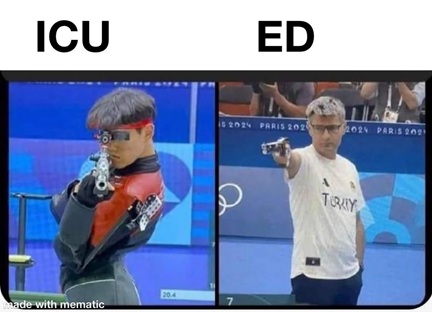
Even within a department, there are different motivating factors for staff. Some people like free donuts. Others like the pride of wrestling a traveling trophy away from another department. Still others like the ego bump of having the CEO give them a call-out at a system-wide meeting. Some people like clear step-by-step instructions and others prefer the freedom to make the work their own by personalizing it. Just because you are working with two nurses, two doctors, or two housekeepers, do not assume that you can motivate them in the same way. Be open and flexible. Be attentive to what generally works and what generally does not.
Progress is not even or smooth
One of our standard walks is down to the public boat landing and back. The walk down will literally take two minutes. This is followed by a ten-minute walk around the perimeter of the small parking lot, ideally with Ellie splashing around in the water. You might think that with the walk back, we can be in and out in under fifteen minutes. But no, the trip back can take fifteen or twenty minutes itself. Tsunami will take a couple of steps, then stop and stare down the road. A few more steps and then she will listen intently to the sounds from the woods. Anyone who has had a boxer will know that when she gets her paws planted, she cannot be moved for love or money. And since treats are not a motivator, that is not an option either. So, a walk that you think will be a quick one becomes a marathon. Sometimes the walk goes smoothly, but one of them will pull up short and stop literally ten yards from the front door. The walk is not over until they say it is over.
The problem is that you might have thought that this project would be simple and did not budget for an extended timeline. Or, with the end so close at hand, you start thinking about the next thing to work on, only to be reminded that you haven’t finished this task yet. We all know that starting a new book-of-work today does NOT mean that it will be fully implemented tomorrow, with 100% compliance realized the next day and scores rocketing up by the end of the week. We know this and yet we still have two issues with this.
- Our bosses don’t know this. We have all had our one-ups ask us what we are doing this month and when we tell them, they say, “But I thought you did that last month.” Behavior modification for a thousand people across a dozen care settings and two-dozen non-clinical settings does not happen overnight. Sometimes managing expectations of senior leaders can feel like half of our job.
- We often forget this ourselves. After all the hard work of training, implementing, and validating, it can feel like, YAY! WE ARE DONE! We can start looking for other mountains to climb. But getting it right one day or with one shift does not mean we are all the way done. Maintaining the work, while attention gets diverted and staff gets turned-over requires special determination. In fact, meeting a target one month or one quarter or one year feels like a success (which it is), but also means we have the tendency to take our foot off the gas pedal.
Remember that the walk is never done until the walk is done. Even when it is done, it just starts the timer counting down to the next walk.
It is the journey, not the destination
I will tell my girls that the first walk of the day is utilitarian. It is about doing what needs to be done, so I can get back and have a cup of coffee. And then they have other ideas. Sometimes it feels like the more I want to rush a walk to its necessary purpose and conclusion, the more opposition I am confronted with. Perhaps this is real or perhaps it is perceived, but it is clear that when I am laser-focused on an outcome, I miss the experience. Worse, I resent the experience. I just wish they would get on board with my mission so I could get to other responsibilities.
If you set an action plan where the ultimate goal is for scores to go up, you will fail. Even if you succeed in the short-term, you will not sustain that success. I know that this sounds like dime-store affirmation but bear with me. Having tunnel vision on one goal will likely have you missing out on corollary goals or benefits. You may skip over the part that creates broad buy-in or truly inspires compliance. An action plan on hourly rounding may focus on documenting occurrences, but you know that, in reality, the point is to force the exposure, so patients and staff can feel the connection of communication. Getting it hard-wired is great, but if you had to choose between 100% compliance with a job done, or 80% compliance but with staff feeling invigorated and patients feeling heard, I think we all can agree with the preferred option. Don’t sacrifice the small wins in the service of the big objective.
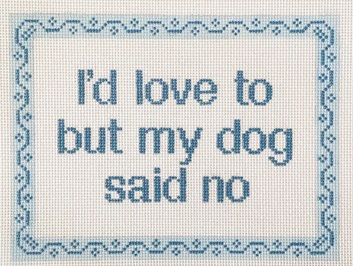
My dogs must know that I was writing about them and that I am coming to the end, because Tsunami just stood up, looked at me, and informed me that the timer for the next walk has beeped. Who am I to argue with her? Or, more accurately, what would arguing really accomplish? As I look at my list, I have five more lessons (including the value of arguing), so I may return to this topic again in the future. But for the moment, my dog said that I have said enough.
1For those not familiar with modern meme-speak, main-character energy is a confident and self-assured demeanor, where individuals imagine themselves in a starring role in their own lives. This can give one confidence to take on the day but it is often used to describe someone who thinks everyone around them is there simply to service their narrative and are not actually people living their own lives.
2I will often reference dogs here because that is what I have. All pets require some level of attention, so I do not mean to minimize anyone else and their pet-of-choice.
3I know a friend of mine, Nancy, reads these essays at least occasionally. We worked together and she would occasionally suffer through some of my main-character energy. She would roll her eyes at how charming everyone thought I was, knowing the real me and knowing that my ego did not usually need that sort of boost. Nancy, if you are reading this, I hope you are well.


Leave a Reply